
 Image 1 of 5
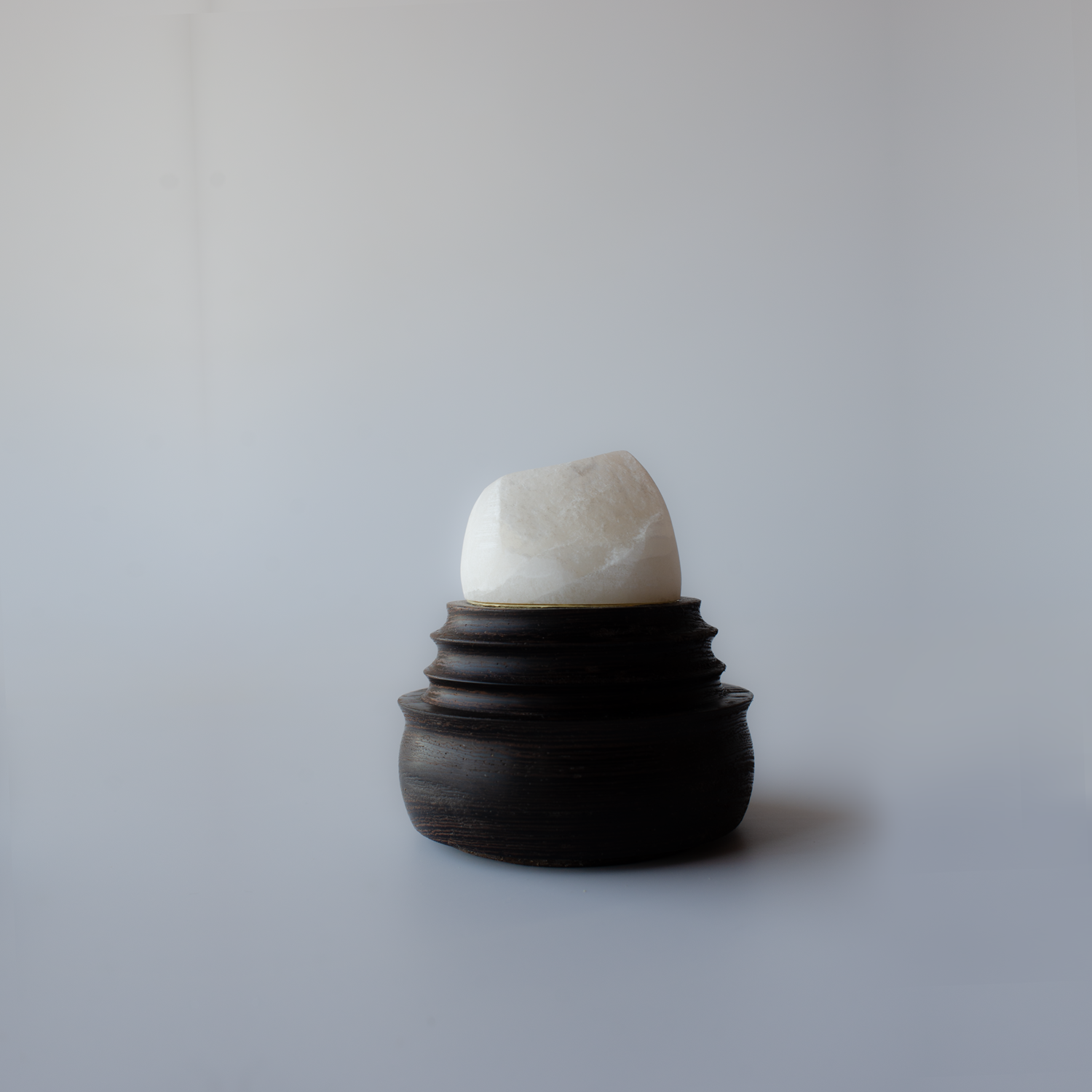 Image 2 of 5
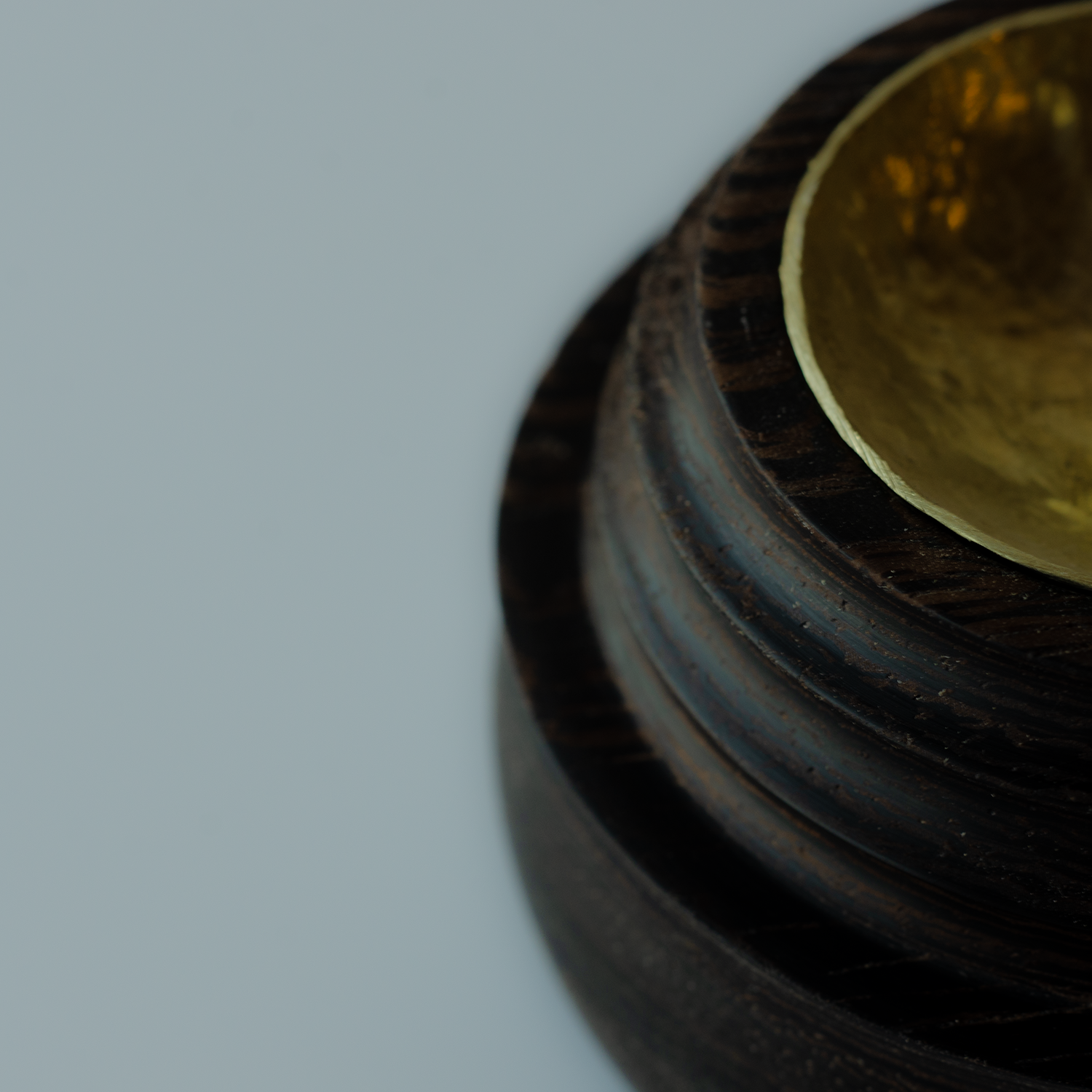 Image 3 of 5
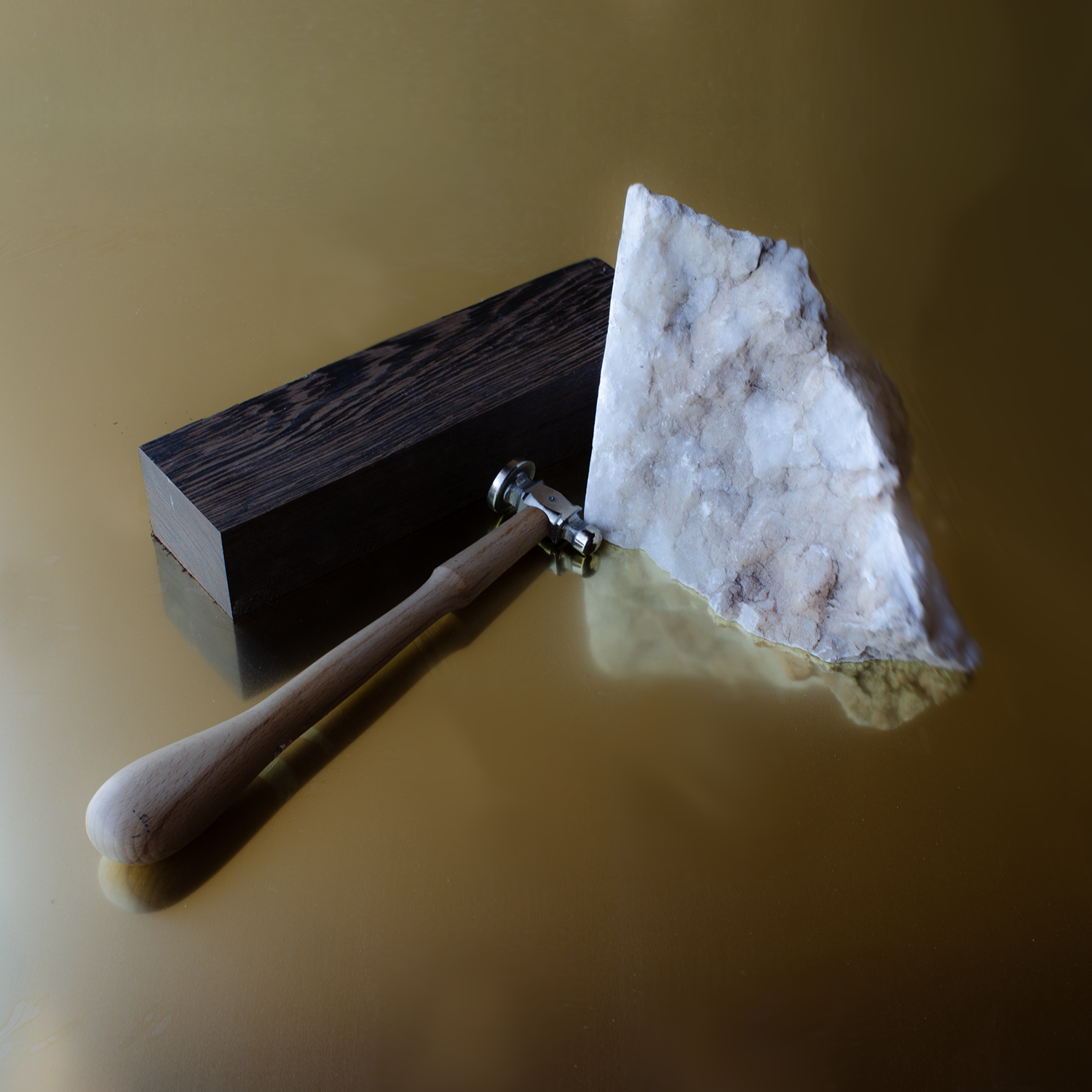 Image 4 of 5
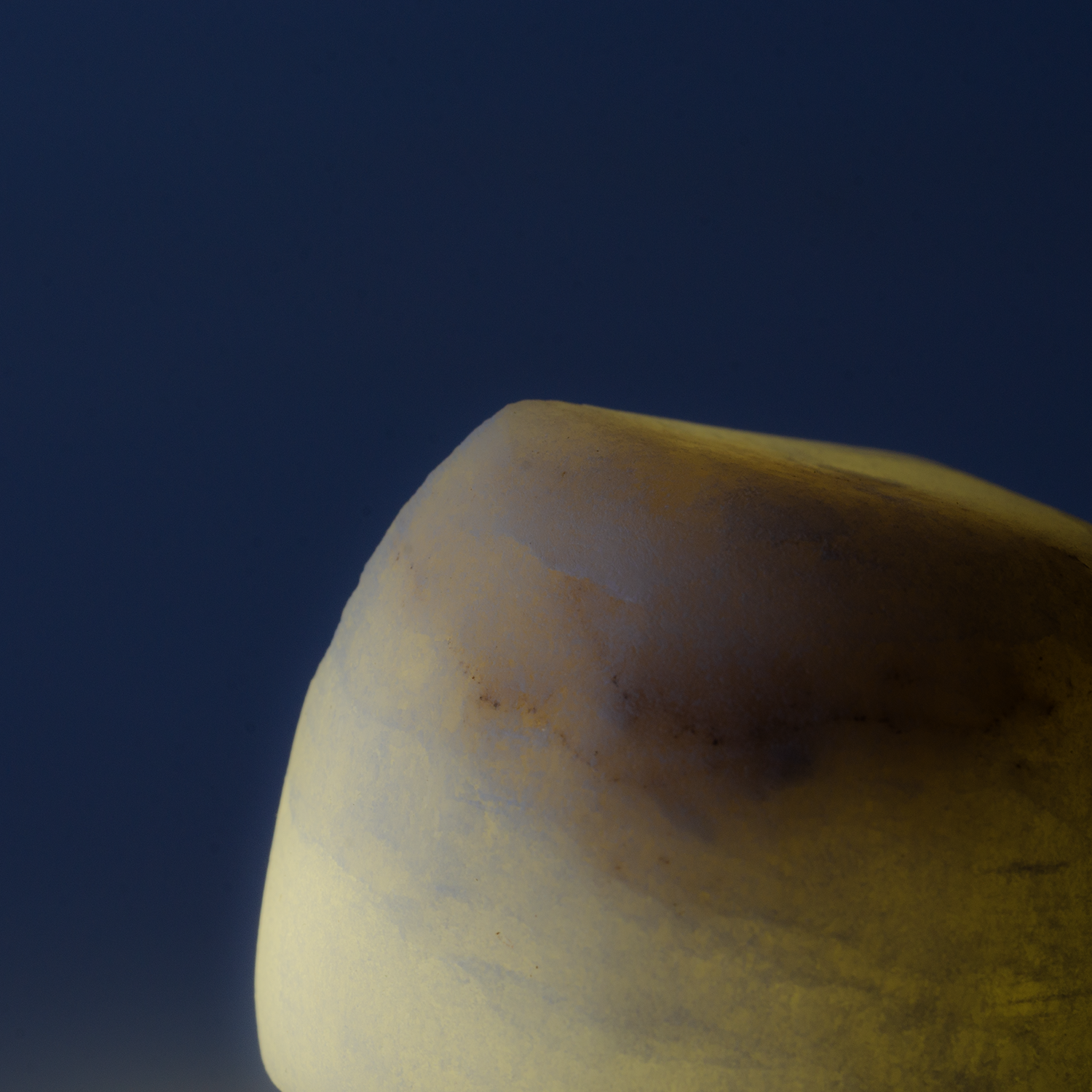 Image 5 of 5
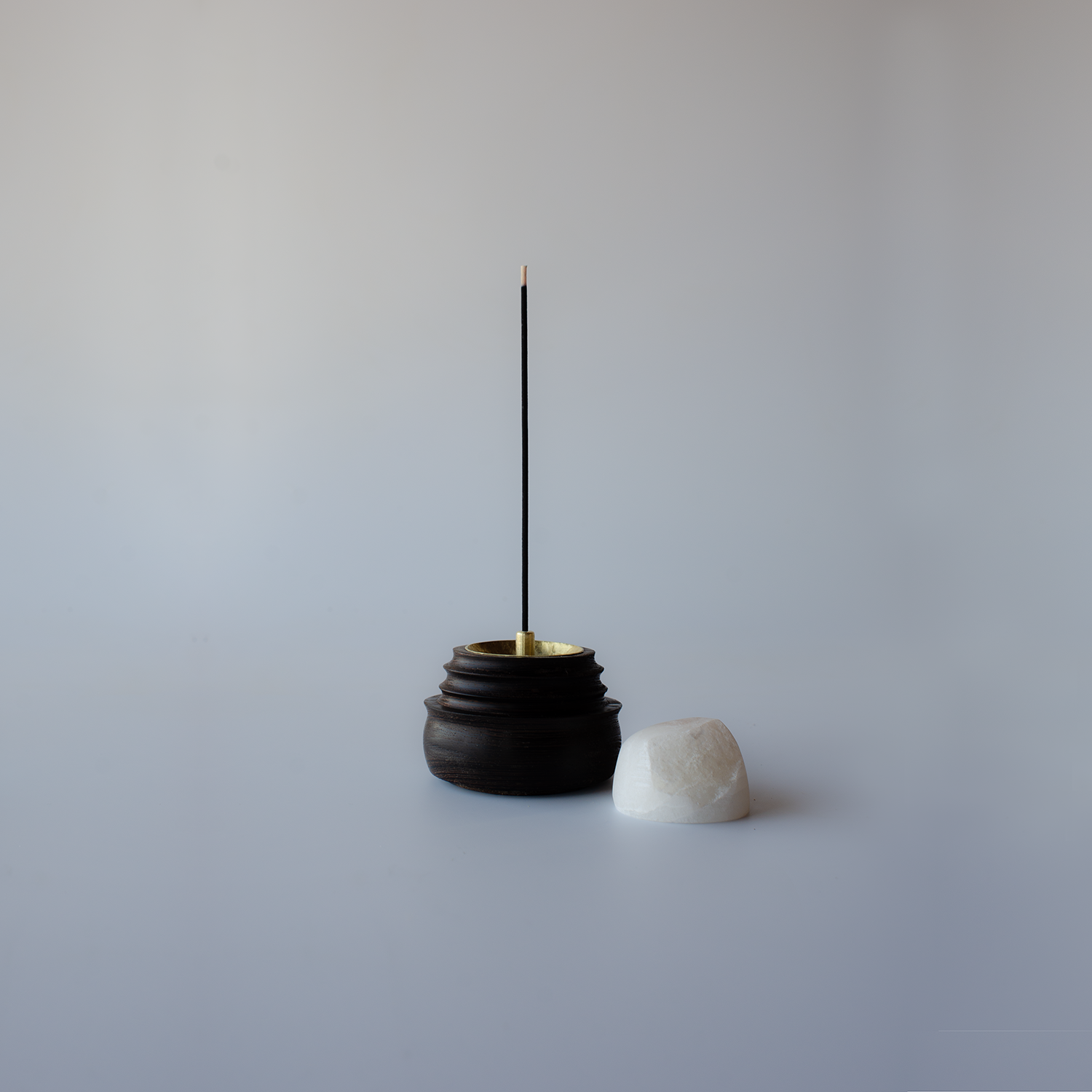
I don’t know why but when these three got together they just wanted to sit around and smoke, one after the other, presenting themselves as incense burners and so here we are.
Without adhesives I had to design balance into each piece. Not aesthetically but literally, all the pieces had to stand on their own. In researching wenge wood, a hardwood native to central Africa, I discovered the traditional medicine practices of the area utilized its bark to encourage emotional balance. These traditions are orally preserved and protected which makes them difficult to study from the outside but the coincidence of finding that info tidbit was a beautiful one.
To honour wenge’s deep, savoury smell I finished each piece in mineral oil infused with sandalwood and damask rose before sealing with bee’s wax.
Alabaster has fascinating historical use as well with its name a-labaste referencing its ancient Egyptian use in crafting ointment vessels dedicated to the cat goddess Bastet, many of which were unearthed from Tuhtankhamun’s tomb. As goddess of the sun and moon, the stone was believed a suitable offering because of its translucence, captured in the photo here, lit from below by my phone light.
And my dear, sweet, sonorous brass. A metal that vibrates sympathetically with sound and has been used to make instruments since the time when metallurgists were alchemists thought to possess mystical powers and underworld affiliations.
These materials have been with us for a long time, each worshipped in their own way throughout the world. For my tiny part I remind those that wish to purchase one of these pieces of the living qualities of these materials. We have been conditioned by industrial capitalism to expect uniformity from the environment when nature is anything but. I take great care to amplify their unique markings and characteristics and wouldn’t even attempt to force them into perfect replicas of one another because how tedious.
I pay myself the living wage for my city which is $27.85/hr. These pieces take me a full day to make and I also include the material cost in the final price.
I don’t know why but when these three got together they just wanted to sit around and smoke, one after the other, presenting themselves as incense burners and so here we are.
Without adhesives I had to design balance into each piece. Not aesthetically but literally, all the pieces had to stand on their own. In researching wenge wood, a hardwood native to central Africa, I discovered the traditional medicine practices of the area utilized its bark to encourage emotional balance. These traditions are orally preserved and protected which makes them difficult to study from the outside but the coincidence of finding that info tidbit was a beautiful one.
To honour wenge’s deep, savoury smell I finished each piece in mineral oil infused with sandalwood and damask rose before sealing with bee’s wax.
Alabaster has fascinating historical use as well with its name a-labaste referencing its ancient Egyptian use in crafting ointment vessels dedicated to the cat goddess Bastet, many of which were unearthed from Tuhtankhamun’s tomb. As goddess of the sun and moon, the stone was believed a suitable offering because of its translucence, captured in the photo here, lit from below by my phone light.
And my dear, sweet, sonorous brass. A metal that vibrates sympathetically with sound and has been used to make instruments since the time when metallurgists were alchemists thought to possess mystical powers and underworld affiliations.
These materials have been with us for a long time, each worshipped in their own way throughout the world. For my tiny part I remind those that wish to purchase one of these pieces of the living qualities of these materials. We have been conditioned by industrial capitalism to expect uniformity from the environment when nature is anything but. I take great care to amplify their unique markings and characteristics and wouldn’t even attempt to force them into perfect replicas of one another because how tedious.
I pay myself the living wage for my city which is $27.85/hr. These pieces take me a full day to make and I also include the material cost in the final price.